

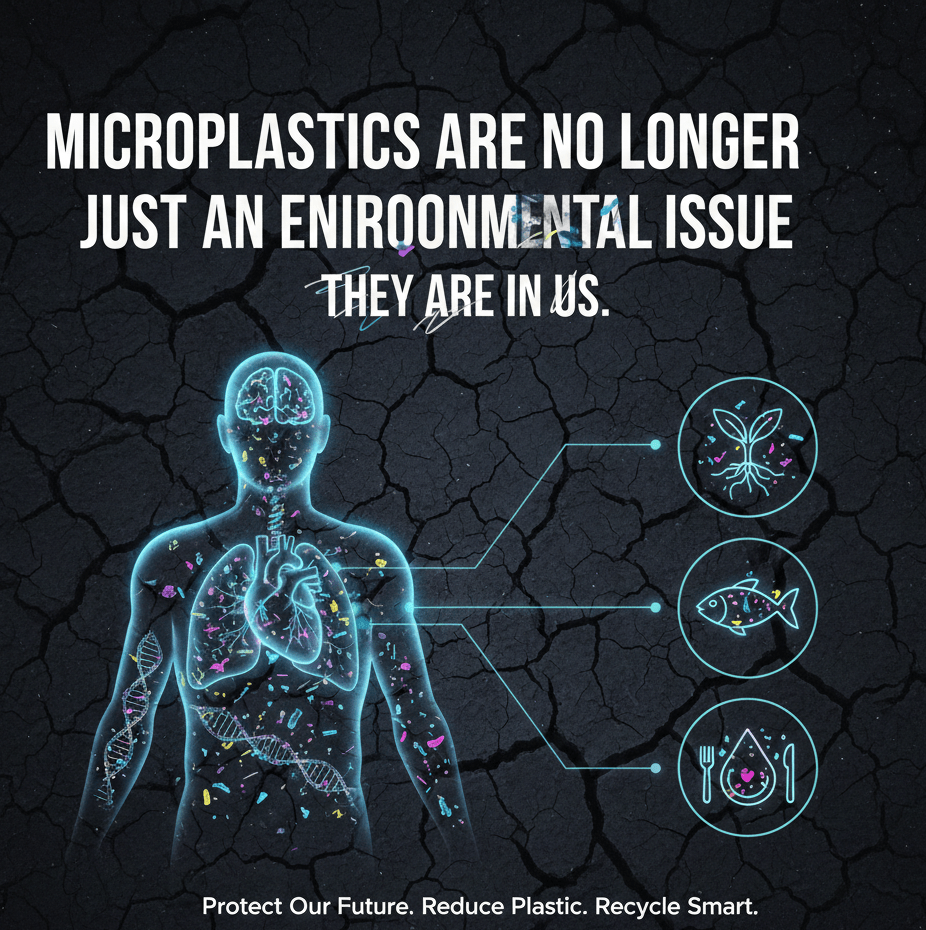
Microplastics are no longer just an environmental concern — they’re now a human health story written inside our bodies. Recent studies have revealed that these tiny plastic particles, once thought to be confined to oceans and soil, are showing up in human blood, organs, and even bones. At Klean Green, where we champion sustainable packaging and eco‑friendly innovation, understanding this hidden impact is critical to shaping healthier futures.
🌍 A Time Capsule of Human Impact
In Hertfordshire, UK, Rothamsted Research houses the world’s longest-running agricultural experiment. Since 1843, soil and crop samples have been meticulously preserved, creating a unique archive of human activity.
• 1940s–50s samples: traces of radioactive fallout from nuclear testing.
• Post‑1960s samples: the unmistakable rise of microplastics, shed from tyres, packaging, and atmospheric deposition.
This archive shows a clear dividing line: the pre‑plastic era versus the plastic‑saturated present.
🫁 Microplastics in the Human Body
Scientists estimate that humans may ingest or inhale tens of thousands of microplastic particles each year. These particles have been detected in:
• Blood, saliva, and breast milk
• Vital organs such as the liver, kidneys, spleen, and brain
• Bone tissue, marking a new frontier in research
A 2024 study found that global consumption of microplastics has increased sixfold since 1990, with hotspots in the US, China, Scandinavia, and parts of the Middle East and North Africa.
⚠️ What Are the Health Risks?
The big question remains: what are microplastics doing inside us?
• Inflammation & oxidative stress: Early studies suggest microplastics may trigger immune responses.
• Toxic chemical exposure: Plastics often carry additives like BPA or phthalates, linked to hormonal disruption.
• Unknown long‑term effects: Research is still in its infancy, with scientists exploring “human challenge trials” to study direct impacts.
While definitive answers are pending, the evidence points to potential risks that demand urgent attention.
💡 Why This Matters for Sustainable Packaging
At Klean Green, we believe the fight against microplastics starts with rethinking packaging. Every plastic wrapper avoided is one less particle entering our soil, water, and bodies. By empowering communities with biodegradable, climate‑positive alternatives, we’re working to reduce the invisible burden of plastic & chemical pollution.


