

Written By: Manaswini Vijayakumar
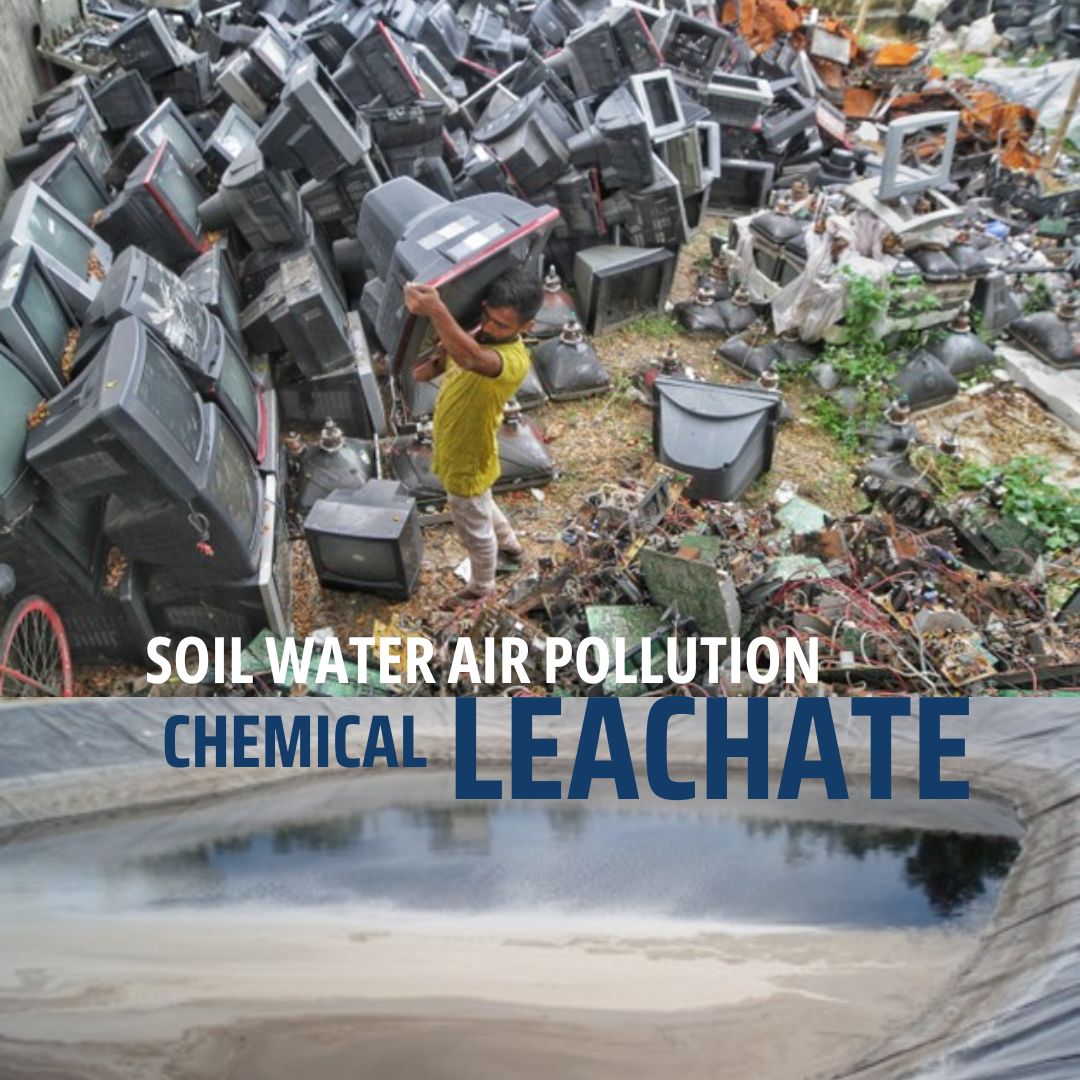
Consider a plausible hypothetical situation. All electronic devices shut down, and artificial intelligence systems cease to operate. The world would come to a standstill. This is no exaggeration. Humanity’s dependence on electronics has tipped over to the absurd – 62 million tonnes (MT) globally per annum and close to 4-5 MT per annum in India alone. Just like fast fashion, electronics have also followed suit in a quick-use, quick-disposal trend. Piles of discarded computer monitors, washing machines, printers, LED screens, cables, and microwaves end up piling up in landfills. This burden is only set to increase, but perhaps the true extent of its fallout has been severely underestimated.
While laws exist in India and worldwide that claim to ensure the streamlined, formalized disposal of waste, Extended Producer Responsibility (EPR) regulations seek to hold industries accountable for how much of their products they manage to recycle. Yet informal disposal, collection, and recycling rules the roost, with caution thrown to the winds. Individual household-level decisions accumulate to determine the e-waste ecosystem as a whole. In November 2025, the Municipal Corporation of Delhi (MCD) issued notices to 35 illegal e-waste units in Mustafabad, highlighting the extent of regulatory laxity and significant pollution risk to water, land and air in the proximity. Likewise, in Bengaluru, 1,000 fish were found dead in Chikkanagamangala Lake as a consewuence of leachate disposal. The Bengaluru Solid Waste Management Limited (BSWML) is planning to build a dedicated leachate treatment plant at Mittaganahalli and Kannur to treat nearly 2,878 million litres of accumulated toxic liquid. Other cities like Gurugram and Chandigarh also populate the news for the same reason- as hubs of technology production and service, this is a foregone conclusion.
So what’s the nature of the damage? E-waste generates solid residues, liquid leachates, and gaseous emissions. Solid e-waste, like cables, batteries, printed circuit boards, and metal coating leak toxic compounds over time that are not inert in nature. They dissolve in water and undergo chemical transformation, sometimes mediated by microbial activity in organic household waste. The toxic metals like nickel, cadmium, chromium, mercury, and lead form hazardous complexes with organic matter and other environmental ligands. When e-waste is heated or burnt, they release noxious fumes, including toxic decomposition products derived from plastic additives such as phthalates and Bisphenol A, brominated flame retardants (BFRs) added to plastic casings to reduce fire risk, furans, polycyclic aromatic hydrocarbons (PAHs), persistent organic pollutants (POPs) and volatile organic compounds (VOCs) from resins and adhesives, fine particulate matter, and acidic gases like hydrogen chloride and, in some cases, sulfur dioxide.
As evident as this problem and its scale are, there is another underlying insidious threat looming. As previously mentioned, disposed e-waste isn’t inert. It interacts with the elements around it. Rainfall or any interaction with water dissolves and leaches away toxic metals and compounds, forming metal-rich liquid mixtures called leachates. Leachates are considerably understudied compared to their solid counterparts, but they are a silent and sustained peril. Flowing into water bodies from untreated industrial sewage, leaching out of e-waste in landfills or even dumped into water bodies as a by product of “urban mining” wherein e-waste is treated with weaker acids (microbes, plants or fungi) to extract metals, leachates are shadow threats. Either as surface runoff or seeping into groundwater, leachates contribute to a widespread poison that affects farmland irrigation and drinking water alike.
Because water pollution is so dispersed, i.e., pollutants are widely spread across water sources or aquifers, it is difficult to monitor and regulate. Because diluted amounts cause indirect exposure over large areas, the magnitude of their impact is invisible and understudied. However, incrementally, these pollutants build up in water sources, resulting in a range of severe health hazards. Seasonal changes render pinpointing difficult; alterations in rainfall patterns and water tables affect how much and how often toxic compounds leach. Being highly mobile, leachates easily move into the soil and plant tissues, slowly percolating through connected groundwater systems and spreading across local water networks.
Imperceptibly spreading, these toxins accumulate in the food chain. Over a period of time, they can increase the risk of respiratory illnesses, kidney disease, and organ toxicity to neurodevelopmental disorders and cancer. The effects are widespread and intergenerational. Before this invisible water crisis transforms into a full-scale public health emergency, drastic mitigatory steps are necessitated.
*This is the first in a two-part series. In the next part, we explore existing mechanisms to address e-waste leachate, both industrial and biogenic. We then explore new trends in these efforts, such as the use of plant waste and cutting-edge research in this area.


